In the world of HVAC systems, ducting plays a crucial role in ensuring proper airflow and ventilation throughout a building. Traditionally, ducts are installed overhead or within walls to distribute hot or cold air effectively. However, in some cases, space constraints or architectural limitations may make it challenging to install ductwork in the conventional manner. This is where suspended ducting comes into play, offering a versatile solution that maximizes space and efficiency.
suspended ducting refers to the installation of ductwork where the ducts are hung from the ceiling or supported by a structure, rather than being mounted onto walls or fitted into cavities. This method of installation has gained popularity in recent years due to its flexibility, allowing for easy adaptation to various building layouts and configurations. Whether it’s a retrofit project or a new construction, suspended ducting offers several advantages that make it a viable option for HVAC systems.
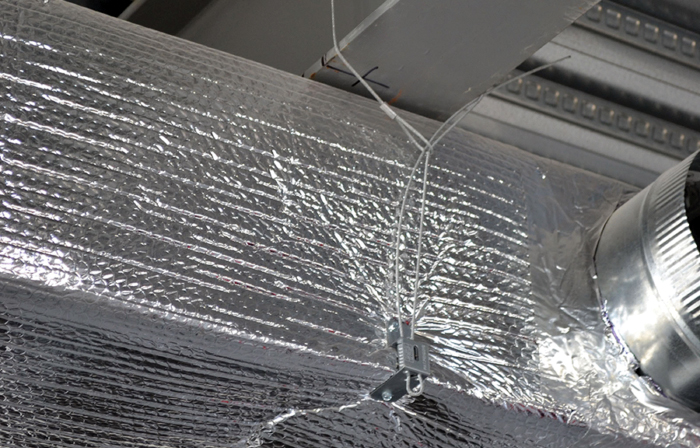
One of the primary benefits of suspended ducting is its ability to free up valuable floor space. By hanging the ductwork from the ceiling, contractors can take advantage of vertical space that would otherwise go unused. This is particularly advantageous in commercial buildings where every square inch counts. With suspended ducting, building owners can maximize their usable space, whether it’s for additional storage, equipment, or simply creating a more open and spacious environment.
In addition to space savings, suspended ducting offers improved airflow distribution compared to traditional ductwork. By positioning the ducts overhead, air can flow more freely and evenly throughout the space, reducing the risk of hot or cold spots and ensuring optimal comfort for occupants. This enhanced airflow distribution can also lead to energy savings, as the HVAC system can operate more efficiently when airflow is not obstructed or restricted.
Another advantage of suspended ducting is its versatility in design and installation. Unlike traditional ductwork that may require extensive modifications to accommodate existing structures or layouts, suspended ducting can be easily customized to fit the specific needs of a building. This flexibility allows contractors to design a system that maximizes airflow efficiency and meets the requirements of the space without compromising on aesthetics or functionality.
Furthermore, suspended ducting offers greater accessibility for maintenance and repairs. With ductwork mounted overhead, technicians can easily access and service the system without the need for cumbersome ladders or scaffolding. This not only makes routine maintenance tasks more manageable but also reduces downtime and disruption to building occupants. In the event of a repair or replacement, suspended ducting allows for quick and efficient access to the affected area, minimizing downtime and associated costs.
From a cost perspective, suspended ducting can also be a more economical option compared to traditional ductwork. The reduced labor and material costs associated with installation, as well as the potential energy savings from improved airflow distribution, can result in long-term cost benefits for building owners. Additionally, the versatility and ease of maintenance offered by suspended ducting can help extend the lifespan of the HVAC system, reducing the need for frequent repairs or replacements.
In conclusion, suspended ducting is a versatile and efficient solution for maximizing space and airflow distribution in HVAC systems. Whether it’s for a commercial office space, retail store, or industrial facility, suspended ducting offers several advantages that make it a valuable option for building owners and contractors. With its space-saving design, improved airflow distribution, and accessibility for maintenance, suspended ducting is a cost-effective solution that can enhance the functionality and comfort of any building. Consider incorporating suspended ducting into your next HVAC project to experience the many benefits it has to offer.